Gypsum Ceiling Designs for Bedrooms in Kenya
Gypsum ceiling designs for bedrooms can transform an ordinary bedroom into a comfortable, modern and visually appealing space. From a simple flat ceiling with recessed lights to a stylish tray ceiling with concealed LED lighting, the right design can complement your bed, wardrobe, curtains, wall finishes and overall bedroom decor.
In Kenya, gypsum ceilings are popular with homeowners renovating master bedrooms, guest rooms, children’s bedrooms and apartments. Their flexibility allows installers to create clean lines, recessed sections, curved shapes and decorative borders to suit different room sizes and budgets.
However, a beautiful bedroom ceiling should do more than look impressive. It should preserve enough headroom, provide comfortable lighting, allow access to electrical components and complement the rest of the bedroom.
Whether you prefer a minimalist finish or a more decorative design, this guide explores bedroom gypsum ceiling ideas, estimated installation costs, lighting options and practical tips to help you choose the right design.
Planning a bedroom makeover? Contact Renovation.co.ke to discuss your ceiling design, lighting requirements and wider renovation plans.
What We Offer
Renovation.co.ke supports homeowners planning ceiling upgrades and related interior improvements. Explore these services and resources as you plan your bedroom:
- Gypsum ceiling designs with lighting for bedrooms and other living spaces.
- Gypsum ceiling design inspiration for simple, modern and decorative ceiling styles.
- Gypsum ceiling installation for homeowners planning a new ceiling or an upgrade.
- 3D design and layout planning to help you visualise your preferred ceiling before installation.
- Floor installation services to coordinate bedroom flooring with the ceiling and wall finishes.
- Building and construction services for wider property improvements.
- Interior finishing services for ceiling details, lighting coordination and other finishing requirements.
Why Choose Gypsum Ceiling Designs for Bedrooms?
The ceiling forms part of the bedroom’s overall design. A well-planned finish can create visual interest without requiring expensive furniture or excessive decoration.
1. Create a Clean, Modern Finish
Gypsum boards allow installers to create smooth surfaces and neat edges. This makes them suitable for contemporary bedrooms that favour simple shapes, balanced proportions and uncluttered finishes.
A plain white ceiling can work beautifully with neutral walls, timber-look flooring and upholstered headboards. You can also introduce a recessed border or subtle geometric feature without covering the entire ceiling with decorative shapes.
2. Improve the Bedroom Lighting
A gypsum ceiling can accommodate different lighting arrangements, including recessed downlights, concealed LED strips and selected pendant fittings.
Concealed lighting can create a softer evening atmosphere, while appropriately positioned downlights provide general illumination. You can also use bedside lamps or wall lights so that you do not have to rely on one bright ceiling fitting.
3. Complement the Bed and Headboard
The bed is usually the main visual focus of a bedroom. A ceiling feature placed above the bed can reinforce the layout and create a balanced appearance.
For example, a rectangular tray ceiling can align with the bed’s width, while a minimalist ceiling can complement an upholstered or timber-look headboard.
4. Suit Different Bedroom Sizes
Gypsum ceiling designs can range from simple flat surfaces to more elaborate multi-level arrangements. This flexibility lets you select a design based on the available ceiling height, room dimensions and budget.
Smaller bedrooms often benefit from clean, shallow designs. Larger bedrooms offer more flexibility for tray ceilings, layered borders and other decorative features.
10 Gypsum Ceiling Designs for Bedrooms
1. Simple Flat Gypsum Ceiling
A flat gypsum ceiling provides a smooth, understated finish without multiple levels or elaborate patterns. It is a practical option for homeowners who want to renovate a bedroom while keeping the design simple.
You can install recessed downlights or a central ceiling light, depending on the room layout and your lighting needs. A plain finish also works well with patterned curtains, colourful bedding or a decorative headboard.
Best for: Small bedrooms, apartments, guest rooms and minimalist interiors.
Design tip: Use a consistent paint finish and plan the lighting positions before installing the boards. A simple ceiling still needs accurate alignment and neat joint finishing to look its best.
2. Single-Layer Ceiling with a Decorative Border
This design combines a main flat ceiling with a shallow gypsum border around the perimeter. The border creates a subtle architectural detail without introducing several levels.
You can keep the border plain or include a concealed lighting channel if the ceiling height and budget allow. This approach suits bedrooms where a completely flat surface looks too basic but a deep layered design would feel excessive.
Best for: Medium-sized bedrooms, contemporary homes and homeowners seeking a restrained decorative finish.
Design tip: Keep the border depth consistent and avoid placing it so low that the room feels enclosed.
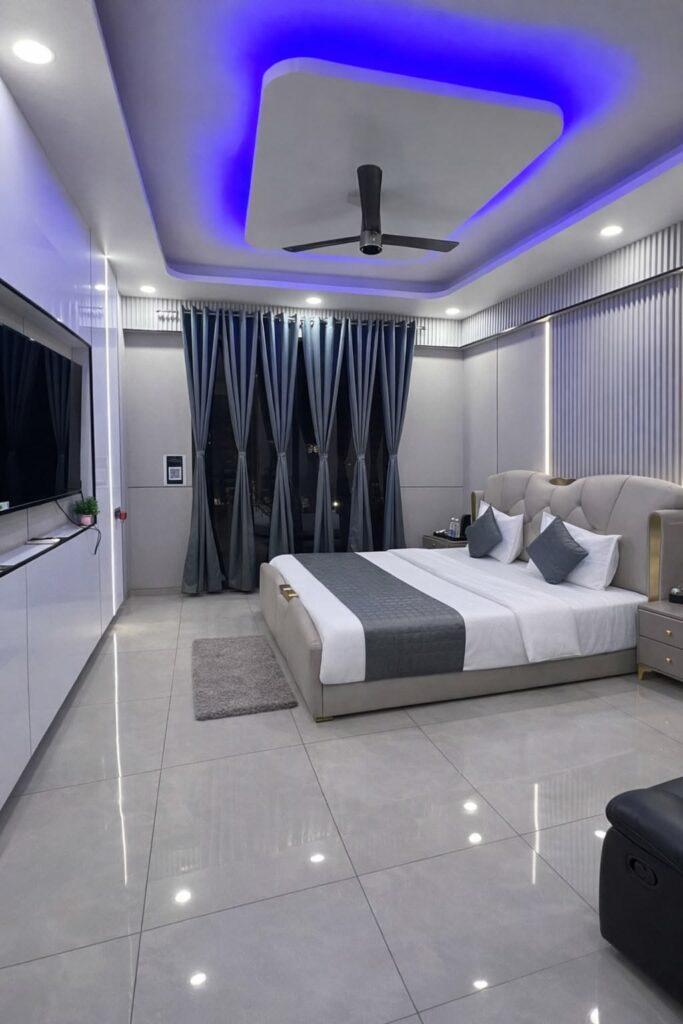
3. Tray Gypsum Ceiling
A tray ceiling features a recessed or raised central section framed by a surrounding border. The central panel can follow the room’s shape or align with the bed.
For example, a rectangular tray above a king-size bed can create a defined feature without requiring decorative detailing across the entire ceiling. You can enhance the design with concealed LED lighting or a central fitting.
Best for: Master bedrooms, spacious guest rooms and contemporary interiors.
Design tip: Consider the ceiling height before selecting the depth of the tray. A shallow design can provide the desired effect while preserving more headroom.
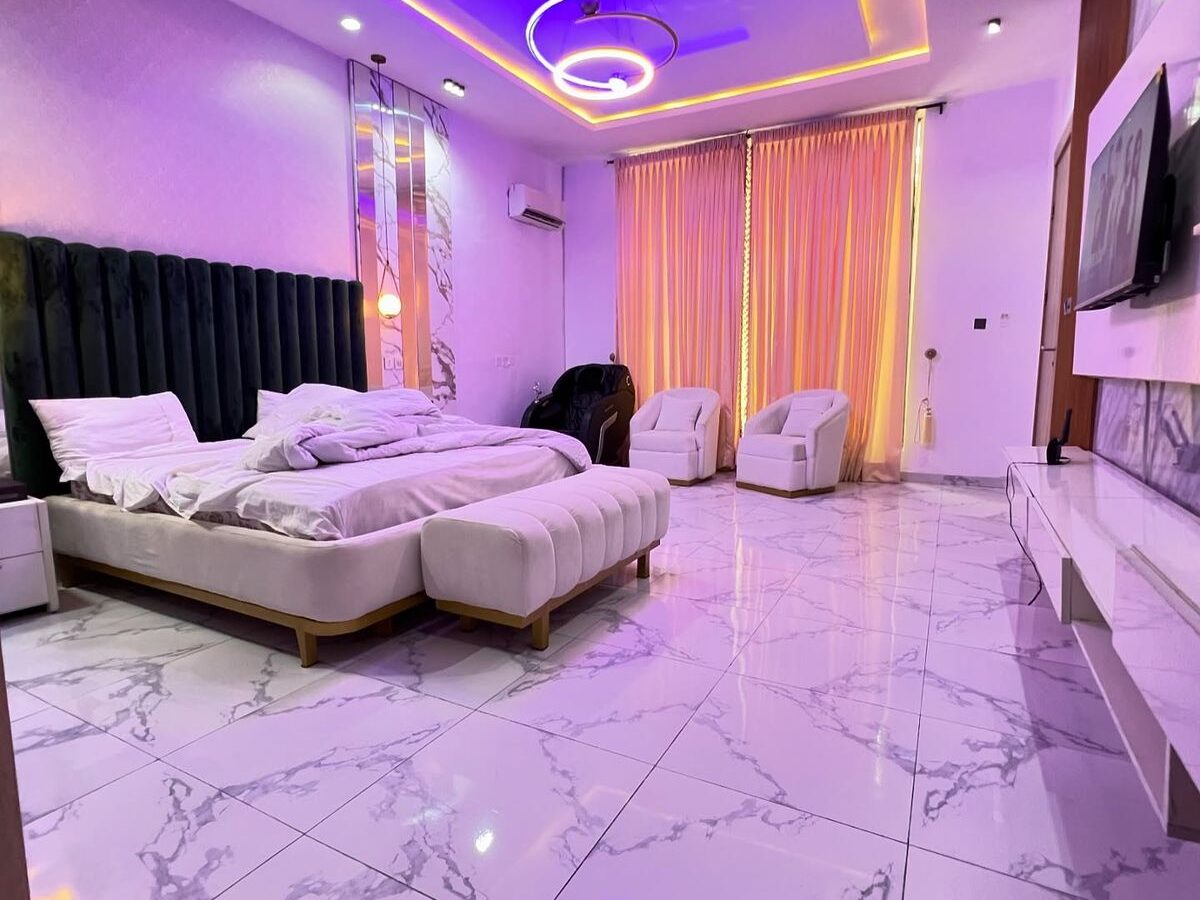
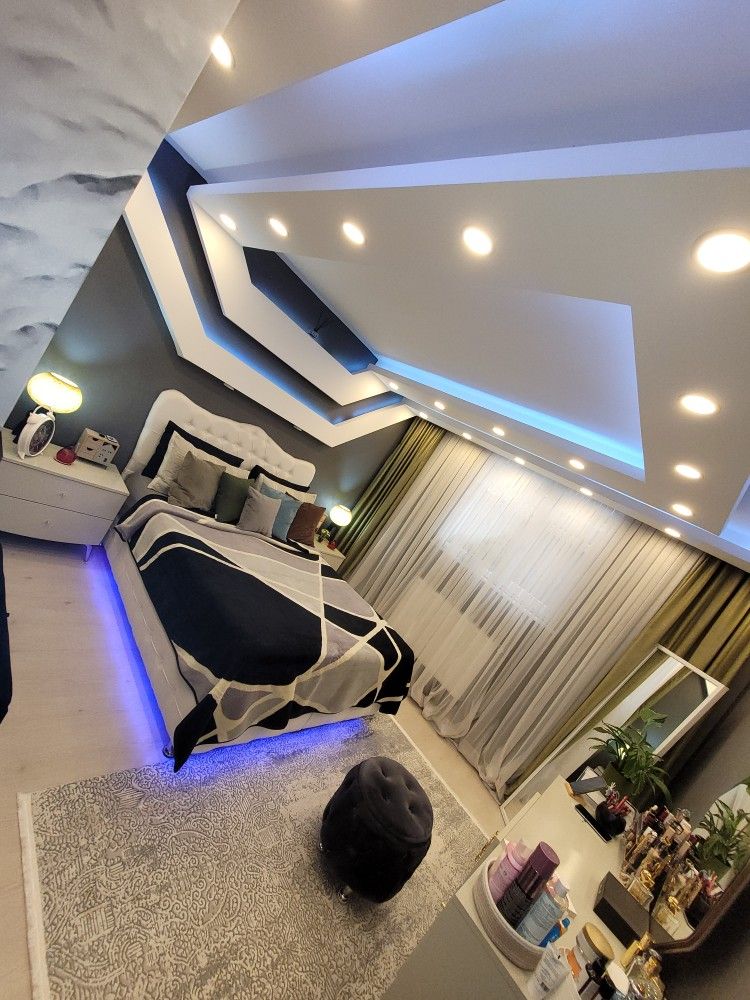
4. Gypsum Ceiling with Concealed LED Lighting
Concealed LED lighting remains a useful option for bedrooms because it allows light to reflect off the ceiling rather than exposing the entire light source.
Installers can integrate LED strips into a recessed border, tray ceiling or stepped design. You can then combine the ambient light with bedside lamps for reading and other activities.
Warm-white lighting, often around 2700–3000K, can create a relaxing atmosphere. The final choice should also suit your personal preference, wall colours and other lighting in the room.
Best for: Master bedrooms, modern apartments and bedrooms designed around a soft evening atmosphere.
Design tip: Plan the LED strip, driver location, wiring and maintenance access before closing the ceiling. Where possible, use suitable controls to adjust light intensity.
For more ideas, explore gypsum ceiling designs with lighting in Kenya.
5. Double-Layered Gypsum Ceiling
A double-layered ceiling uses two levels to create depth and a more distinctive appearance. Designers often combine a central panel with a surrounding border, using changes in height to define the design.
The layers can remain the same colour or use subtle contrasts. Recessed downlights and concealed LED strips can highlight the different sections.
However, this design requires careful planning because the added framework and boardwork may reduce the available ceiling height.
Best for: Larger master bedrooms and rooms with sufficient ceiling height.
Design tip: Use the second level to emphasise a specific area rather than adding layers throughout the room without a clear plan.
6. Floating Gypsum Ceiling
A floating ceiling creates the appearance of a suspended panel separated from the surrounding ceiling by a shadow gap or concealed lighting.
The floating section may sit above the bed or occupy the central part of the room. When designed carefully, it provides a modern feature while maintaining a clean overall appearance.
This approach can work well in bedrooms with simple furniture and a restrained colour palette.
Best for: Contemporary master bedrooms and homeowners who prefer architectural details over decorative patterns.
Design tip: Confirm the drop depth, support requirements and lighting layout during the design stage. Keep enough space for comfortable movement and easy access to the room’s services.
7. Geometric Gypsum Ceiling
Geometric designs use rectangles, squares, straight lines or selected angled shapes to create an organised pattern across the ceiling.
A bedroom might use one central rectangle above the bed or a repeated arrangement of shapes around the perimeter. Geometric patterns can also complement simple wall panelling or a headboard with straight lines.
The main challenge is proportion. Too many shapes can distract from the bedroom’s purpose and make the ceiling look unnecessarily busy.
Best for: Modern bedrooms, contemporary homes and interiors with clean-lined furniture.
Design tip: Choose one dominant pattern and coordinate it with the bed position, wardrobe and room dimensions.
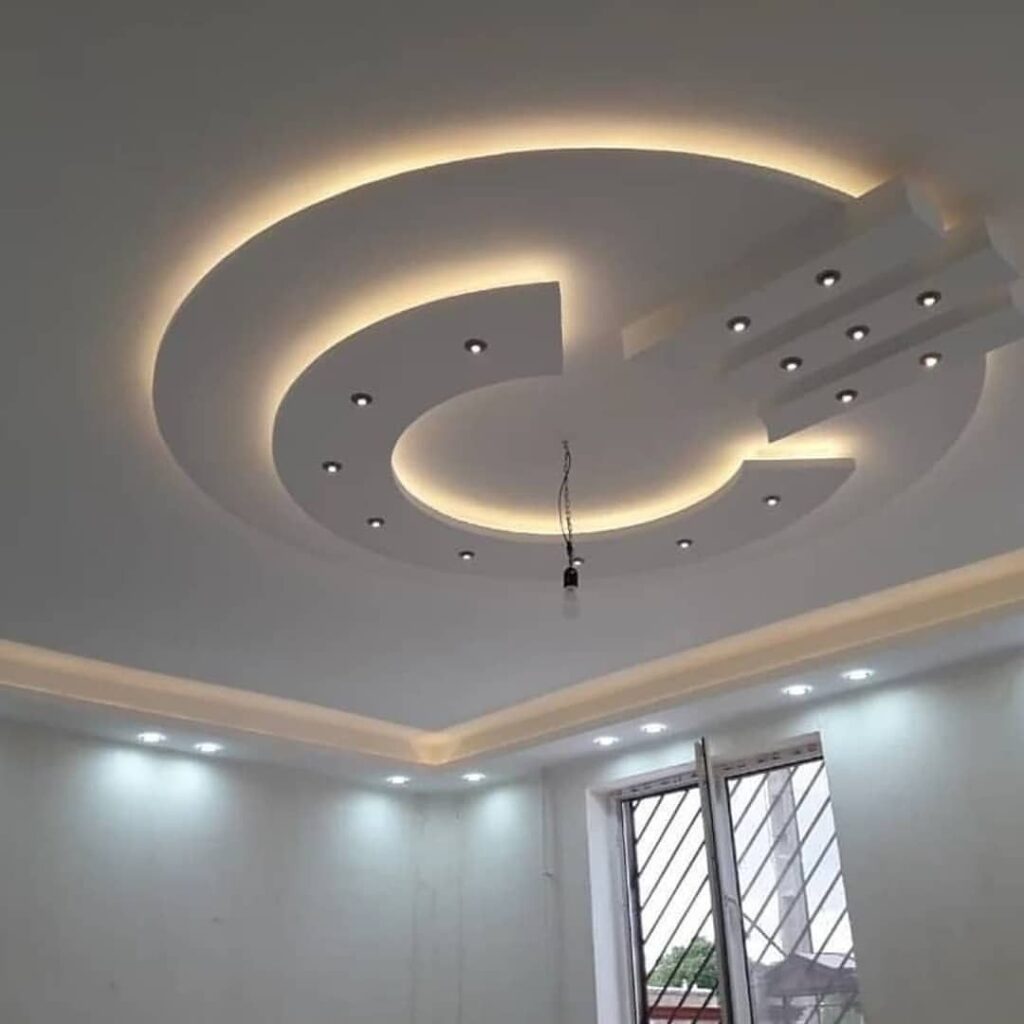
8. Circular or Curved Gypsum Ceiling
Curved designs introduce softer shapes into a bedroom dominated by rectangular furniture and straight walls. A circular centre feature or gentle curved border can create a distinctive focal point.
Some designs combine curves with recessed lighting, while others rely on the shape itself to provide visual interest.
Curved sections usually need more careful cutting, setting-out and finishing than straight-edged designs, so include these details when preparing the budget.
Best for: Custom-designed bedrooms and larger spaces where the ceiling can accommodate a distinctive feature.
Design tip: Use curves selectively. One well-proportioned feature often looks more balanced than several unrelated shapes.
9. Minimalist Ceiling with Recessed Downlights
A minimalist gypsum ceiling combines a simple surface with carefully positioned downlights. It offers a modern finish without requiring multiple layers, decorative shapes or prominent ceiling borders.
The downlights can provide general illumination, but the layout should account for the bed, wardrobe, dressing area and circulation space. You can also use separate bedside lighting for reading.
This design is especially useful where the homeowner wants an uncluttered bedroom with practical lighting.
Best for: Small bedrooms, rental apartments, guest rooms and minimalist homes.
Design tip: Do not position every light solely to create visual symmetry. Consider how you use the room and whether any fitting could cause glare while you are lying in bed.
10. Bedroom Ceiling Coordinated with the Headboard Wall
This approach treats the ceiling and headboard wall as parts of one design. A tray, shallow border or concealed light feature can align with the bed, while the wall behind it uses paint, panels or another suitable decorative finish.
The aim is to create a coordinated focal area without overdecorating every surface.
A neutral gypsum ceiling can complement a textured headboard wall, while a more decorative ceiling may suit plain walls and simple bedding.
Best for: Master bedrooms, guest rooms and homeowners planning a complete bedroom makeover.
Design tip: Finalise the bed location before setting out the ceiling. This helps align the ceiling feature with the headboard and avoids a design that looks off-centre once the furniture is installed.
Which Gypsum Ceiling Design Is Best for Your Bedroom?
The best design depends on the size of the room, available ceiling height, furniture arrangement, lighting preference and budget.
| Bedroom type | Suitable design | Main consideration |
|---|---|---|
| Small bedroom | Flat ceiling or shallow border | Preserve headroom |
| Low-ceiling bedroom | Flat ceiling with neat lighting | Avoid deep drops |
| Master bedroom | Tray or double-layered ceiling | Coordinate with the bed |
| Guest bedroom | Flat or single-layer ceiling | Keep the design practical |
| Modern apartment | Minimalist ceiling with downlights | Maintain a clean appearance |
| Spacious bedroom | Tray or floating ceiling | Balance the proportions |
| Bedroom with a feature headboard | Coordinated ceiling and headboard design | Align the two features |
| Bedroom needing soft evening lighting | Cove-lit ceiling | Plan controls and maintenance |
Before choosing a design, measure the room and check the existing ceiling height. Then consider the position of the bed, wardrobe, windows, curtains, ceiling fan and electrical points.
A design that looks attractive in a large master bedroom may overwhelm a small guest room. Selecting the right proportions matters more than adding the greatest number of decorative details.

How Much Do Gypsum Ceiling Designs for Bedrooms Cost in Kenya?
The cost of bedroom gypsum ceiling installation in Kenya depends on the ceiling area, design complexity, materials, finishing and lighting requirements.
The following are indicative planning rates based on published SUIMAS ceiling cost guidance. They are not guaranteed quotations for every bedroom.
| Ceiling design | Estimated rate per m² |
|---|---|
| Plain gypsum ceiling | KES 1,000–1,500 |
| Simple modern design | KES 1,500–2,500 |
| Bulkheads and stepped designs | KES 2,000–3,500+ |
| Feature ceiling with cove lighting | KES 2,500–4,500+ |
| Complex premium designs | KES 4,000–6,000+ |
You can review the gypsum ceiling installation cost guide in Kenya for further budgeting information.
Ask the installer whether the quoted rate includes the framing, gypsum boards, jointing, painting, LED strips, light fittings and electrical work. Some contractors price these items separately.
Example: Budgeting for a 12 m² Bedroom
Suppose your bedroom has a ceiling area of approximately 12 square metres. Using the indicative rates above, your estimated ceiling budget would be:
- Plain gypsum ceiling: KES 12,000–18,000.
- Simple modern ceiling: KES 18,000–30,000.
- Stepped ceiling: KES 24,000–42,000.
- Feature ceiling with cove lighting: KES 30,000–54,000.
- Complex premium ceiling: KES 48,000–72,000.
These examples multiply the estimated area by the indicative price per square metre. They do not represent fixed supply-and-install quotations. The final price may change based on the design, site conditions, finishing scope and whether lighting equipment is included.
For a more accurate estimate, provide your bedroom dimensions, location and preferred design, along with photos of the existing ceiling where possible.
Factors That Affect Bedroom Gypsum Ceiling Costs
1. Bedroom Size
Larger rooms generally require more boards, framework, jointing materials and labour. However, smaller bedrooms with complicated designs can have higher costs per square metre because installers must spend more time on detailed sections.
2. Ceiling Design Complexity
Flat ceilings are usually simpler to install than curved, stepped or multi-level designs. Additional shapes and recesses may require more framework, board cutting and finishing.
3. Lighting Requirements
Recessed downlights, concealed LED strips, pendant fittings and smart lighting controls affect the final budget. Agree on the lighting plan before installation and confirm which electrical items are included in the quotation.
4. Materials and Framework
Board specifications, framing components, fasteners and jointing products contribute to the quality of the finished ceiling. Select materials suitable for the application and existing building conditions.
5. Painting and Surface Finishing
Gypsum boards need proper joint treatment and surface preparation before painting. Detailed ceilings may require additional work around corners, curves and recessed sections.
6. Existing Ceiling Conditions
A ceiling renovation may involve removing old finishes, repairing the underlying structure or adjusting existing wiring. Such work can increase the project cost.
7. Site Access and Location
Transport, working height, access to the room and material availability may affect the quotation. Discuss the project location with the installer before confirming the final price.
How to Choose the Right Bedroom Ceiling Design
A good design should support comfortable use of the bedroom while complementing its appearance. Consider these points before making a decision.
Start with the ceiling height. A flat ceiling or shallow border is often preferable when the available height is limited. Deeper layered designs need enough room to avoid making the bedroom feel enclosed.
Think about your lighting needs. Bedrooms usually benefit from flexible lighting that supports both general illumination and a more relaxed evening atmosphere. Combine ceiling lighting with bedside or wall lights where suitable.
Coordinate the design with your furniture. The ceiling should work with the bed, wardrobe, dressing table and curtains. Measure the furniture layout before finalising the ceiling pattern.
Keep the colours balanced. White and light neutral finishes work with many bedroom styles. You can introduce stronger colours through the headboard wall, bedding, curtains or selected ceiling details.
Plan for maintenance. LED drivers, junctions and other components that may need servicing should remain accessible. Do not permanently cover services that require future inspection.
Consider the full bedroom design. A ceiling may look attractive on its own but still feel disconnected from the rest of the room. Coordinate it with flooring, paint, window treatments and wall finishes. 3D design and layout planning can help you visualise how these elements work together.
Common Mistakes to Avoid
Even a good design can deliver disappointing results when practical details are overlooked.
- Choosing a design that is too deep: Excessive layers can reduce the sense of space in a low bedroom.
- Overusing decorative shapes: Too many patterns can compete with the bed and other furnishings.
- Planning lighting too late: Late changes can create poorly positioned cut-outs and unnecessary rework.
- Ignoring access to electrical components: Concealed lighting still needs a practical maintenance plan.
- Using a reference photo without considering room dimensions: The same design may look very different in a smaller bedroom.
- Accepting an unclear quotation: Confirm the scope for framing, boards, finishing, painting and lighting before work begins.
- Ignoring moisture problems: Repair leaks or other sources of moisture before covering the ceiling.
- Neglecting joint finishing: Uneven surfaces and poorly finished joints can affect the appearance of the entire room.
Clear planning before installation helps prevent avoidable costs and makes it easier to inspect the finished work.
Bedroom Gypsum Ceiling Installation Process
A structured installation process helps ensure the design fits the bedroom and the work proceeds in the right order.
Step 1: Site Assessment and Measurement
Measure the bedroom and assess the existing ceiling, available headroom, electrical points and any repairs required. Confirm the positions of the bed, wardrobe, windows and curtains.
Step 2: Design Selection
Choose a suitable design based on your preferred style, room dimensions and budget. Confirm whether the ceiling will remain flat or include borders, trays, layers or curved sections.
Step 3: Lighting and Electrical Planning
Agree on downlight positions, LED strips, switches and other fittings. Confirm how cables and drivers will be accommodated and accessed for future maintenance.
Step 4: Quotation and Material Selection
Request a written quotation that lists the agreed design, materials, area, labour, finishing and lighting scope. Clarify any exclusions before approving the work.
Step 5: Framework and Gypsum Board Installation
The installer sets out and fixes the supporting framework before installing the boards. The team then forms the specified recesses, borders or decorative shapes.
Step 6: Jointing, Finishing and Painting
The installer treats the joints, prepares the surface and applies the agreed finish. The final appearance depends on proper alignment, smooth finishing and suitable paint preparation.
Step 7: Inspection and Handover
Inspect the ceiling and lighting, check the quality of the finish and confirm that agreed outstanding items have been addressed.
The project timeline depends on bedroom size, design complexity, material availability and whether other renovation work is taking place at the same time.
Why Choose Renovation.co.ke for Your Bedroom Ceiling Project?
A bedroom renovation should combine attractive design with practical planning. The ceiling needs to suit the building’s dimensions, coordinate with the lighting and complement the rest of the bedroom.
Renovation.co.ke helps homeowners plan ceiling upgrades as part of wider renovation projects. Whether you want a simple flat ceiling, a tray design or a layered feature with concealed lighting, start with the room’s dimensions and your priorities.
Before requesting a quotation, prepare your approximate measurements, preferred design, project location and budget. Photos of the current room can also help communicate what you want to achieve.
For a coordinated interior, you can explore SUIMAS ceiling design options, learn more about Interior Designers in Kenya and review interior finishing services for other parts of the bedroom.
If your plans cover more than the bedroom, aluminium.co.ke can be relevant when reviewing aluminium window or door requirements, while commercialkitchens.co.ke is useful for projects that also include a commercial kitchen.
Areas We Serve Across Kenya
Renovation projects can be planned across all 47 counties: Baringo, Bomet, Bungoma, Busia, Elgeyo-Marakwet, Embu, Garissa, Homa Bay, Isiolo, Kajiado, Kakamega, Kericho, Kiambu, Kilifi, Kirinyaga, Kisii, Kisumu, Kitui, Kwale, Laikipia, Lamu, Machakos, Makueni, Mandera, Marsabit, Meru, Migori, Mombasa, Murang’a, Nairobi City, Nakuru, Nandi, Narok, Nyamira, Nyandarua, Nyeri, Samburu, Siaya, Taita-Taveta, Tana River, Tharaka-Nithi, Trans Nzoia, Turkana, Uasin Gishu, Vihiga, Wajir and West Pokot.
Within Nairobi, enquiries may include homes in Nairobi CBD, Westlands, Kilimani, Kileleshwa, Lavington, Karen, Runda, Kasarani, Roysambu, South B and South C. In Mombasa, projects may be planned in areas such as Nyali, Bamburi, Kizingo and Tudor. Site access, transport, scheduling and service availability depend on the individual project.
Get a Quotation for Gypsum Ceiling Designs for Bedrooms
The right gypsum ceiling can give your bedroom a clean, modern and welcoming finish. You might prefer a simple flat ceiling, a shallow border, a tray design or a layered feature with concealed lighting. The important thing is to choose a style that suits your bedroom’s dimensions, lighting needs and budget.
Contact Renovation.co.ke to discuss the design you have in mind and the requirements for your bedroom renovation.
Visit the Renovation.co.ke contact page to make an enquiry.
Frequently Asked Questions
1. Which gypsum ceiling design is best for a bedroom?
A flat ceiling, shallow border or tray ceiling suits many bedrooms. The best choice depends on the available ceiling height, room size, furniture arrangement, lighting preference and budget.
2. Are gypsum ceilings suitable for small bedrooms?
Yes. A flat ceiling or a shallow decorative border can work well in a small bedroom. Simple shapes help maintain a spacious appearance, while deep layers may make the room feel smaller.
3. What is the most affordable gypsum ceiling design for a bedroom?
A plain flat gypsum ceiling is generally one of the simplest options. The final cost depends on the room area, materials, labour, surface preparation and finishing requirements.
4. How much does a gypsum ceiling cost for a bedroom in Kenya?
Indicative rates range from KES 1,000–1,500 per square metre for a plain gypsum ceiling to KES 2,500–4,500+ per square metre for a feature ceiling with cove lighting. Complex premium designs may cost more. Request a written quotation for your specific room.
5. Which lights work best with bedroom gypsum ceilings?
Recessed downlights and concealed LED strips are popular options. You can also use bedside lamps or wall lights for reading and evening comfort. Choose the lighting based on how you use the bedroom.
6. Can I install LED strips in an existing gypsum ceiling?
Sometimes. An installer should assess the ceiling void, wiring, available space, existing framework and access requirements before recommending a suitable arrangement.
7. Does a gypsum ceiling reduce bedroom height?
Yes. A suspended ceiling occupies some of the available height. The amount depends on the framework, ceiling design and services that must fit above the boards. A shallow design is often preferable when height is limited.
8. Can a tray ceiling work in a master bedroom?
Yes. A tray ceiling can create a visual feature above the bed and accommodate concealed lighting. Its proportions should suit the bed position and the available ceiling height.
9. How do I maintain a gypsum bedroom ceiling?
Keep the surface clean, inspect it periodically for cracks or signs of moisture, and repair leaks promptly. Arrange for a qualified professional to assess electrical faults or damaged sections.
10. Should I choose the ceiling design before buying bedroom furniture?
It is best to plan them together. Knowing the bed and wardrobe positions helps you align ceiling features and lights with the room’s layout. If you already own the furniture, measure it before finalising the design.