Cost of Modern Gypsum Ceiling Designs in Kenya
The cost of modern gypsum ceiling designs in Kenya depends on the ceiling area, design complexity, materials, labour, lighting and finishing. A simple flat gypsum ceiling usually costs less than a stepped design, a tray ceiling with concealed LED lighting or a premium multi-level ceiling.
Gypsum ceilings have become a popular option for homeowners, landlords and commercial property owners who want smooth finishes and modern interior designs. They can create decorative ceiling features in living rooms, bedrooms, kitchens, dining rooms and offices while providing space for selected lighting installations.
However, comparing gypsum ceiling prices can be confusing because contractors do not always include the same items in their quotations. One price may cover boards, framing and joint finishing, while another may also include painting, LED strips, electrical work and decorative details.
This guide explains the cost of modern gypsum ceiling designs in Kenya, with indicative prices per square metre, room-by-room budget examples, material and labour considerations, lighting costs and practical tips for comparing quotations.
Planning a new gypsum ceiling or renovating an existing one? Contact Renovation.co.ke to discuss your preferred design, room dimensions and installation budget.

What We Offer
Renovation.co.ke supports homeowners and businesses planning gypsum ceiling installations and wider interior improvements. Explore these related services and resources:
- Gypsum ceiling designs with lighting in Kenya for modern ceilings with recessed lights and concealed LED strips.
- Gypsum ceiling cost estimates including modern lighting fixtures for budgeting ceiling and lighting combinations.
- Gypsum ceiling installation cost in Kenya for basic and decorative ceiling price ranges.
- Gypsum ceiling design inspiration to explore contemporary ceiling styles.
- Gypsum ceiling installation services for new installations and ceiling upgrades.
- 3D design and layout planning to visualise your proposed ceiling before construction.
- Renovation services for coordinating ceilings with painting, flooring, electrical work and other improvements.
How Much Does a Modern Gypsum Ceiling Cost in Kenya?
For initial budgeting, the following are indicative planning rates published in the SUIMAS gypsum ceiling cost guide. Your actual quotation may differ depending on the specifications, site conditions and items included.
| Modern gypsum ceiling design | Estimated cost per m² |
|---|---|
| Plain flat gypsum ceiling | KES 1,000–1,500 |
| Simple modern gypsum design | KES 1,500–2,500 |
| Bulkheads and stepped ceiling designs | KES 2,000–3,500+ |
| Feature ceiling with cove lighting | KES 2,500–4,500+ |
| Complex premium gypsum ceiling | KES 4,000–6,000+ |
| Multi-level ceiling with advanced smart lighting | KES 5,500–9,000+ |
These figures are budgeting estimates, not fixed market prices or guaranteed installation quotations. The smart-lighting range is a broader premium package and should not be treated as a ceiling-only rate.
The most important distinction is whether a quotation covers the complete installation or only selected parts. Some contractors price the gypsum structure and finishing separately from light fittings, LED strips, drivers, wiring and painting.
For a more specific estimate, review the gypsum ceiling installation cost guide and compare its scope with your project’s requirements.
Cost of Gypsum Ceiling Designs by Type
Different designs require different amounts of framing, cutting, finishing and lighting work. Understanding these differences helps you choose a style that meets your design goals without unnecessary expenses.
1. Plain Flat Gypsum Ceiling
A plain gypsum ceiling creates a smooth surface without elaborate shapes or multiple levels. It suits homeowners who prefer a clean finish or need to cover an uneven existing ceiling.
Indicative cost: KES 1,000–1,500 per m².
This is a practical starting point for bedrooms, corridors, small offices and other spaces where decoration is not the main priority.
You can also install suitable recessed lights, but confirm whether the quotation covers the light fittings, wiring and electrical labour.
2. Simple Modern Gypsum Ceiling
A simple modern ceiling may include a slim border, a shallow drop or a limited decorative feature. It adds character without requiring extensive multi-level construction.
Indicative cost: KES 1,500–2,500 per m².
This option works well in modern homes, apartments and small businesses. It offers more design flexibility than a flat ceiling while keeping the layout relatively straightforward.
3. Stepped Gypsum Ceiling
A stepped ceiling uses different levels to create depth around the centre or perimeter of the room. It can complement modern living rooms, bedrooms, offices and dining spaces.
Indicative cost: KES 2,000–3,500+ per m².
The price increases when the design includes deeper drops, several levels, complex corners or concealed lighting channels.
A simple stepped ceiling may be more economical than a design with multiple layers and many decorative details.
4. Tray Gypsum Ceiling
A tray ceiling features a central section that appears recessed or raised relative to a surrounding border. It can frame a bed, dining table, sitting area or other focal point.
Planning allowance: approximately KES 2,200–4,200 per m², depending on the specification.
A basic tray ceiling may cost less than a version with several levels, concealed LED lighting and a central pendant fitting.
Before selecting the design, check the available ceiling height and confirm whether the quoted rate includes the lighting components.
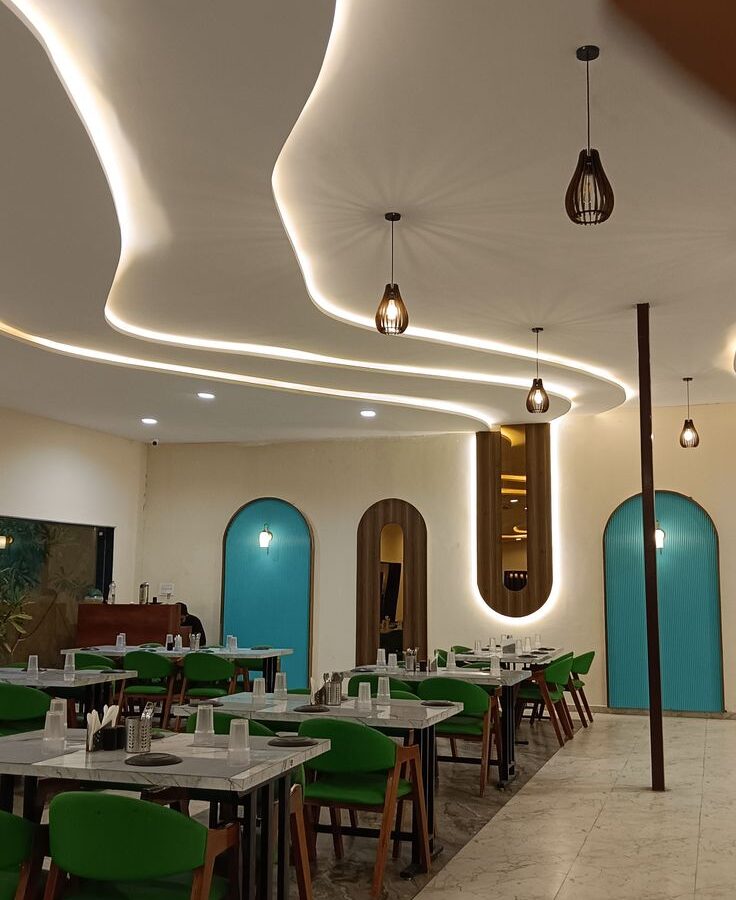
5. Gypsum Ceiling with Concealed LED Cove Lighting
Cove lighting uses a recessed channel to hide an LED strip and direct light across the ceiling surface. It creates a soft, indirect lighting effect and works well with stepped or tray ceilings.
Indicative cost: KES 2,500–4,500+ per m² for a feature ceiling with cove lighting.
The final amount depends on the channel design, LED strip specification, driver, controls, electrical work and finishing.
You can explore gypsum ceiling designs with lighting for more ideas on integrating lighting into the ceiling structure.
6. Coffered Gypsum Ceiling
A coffered ceiling uses repeated recessed squares or rectangles to create a formal, structured appearance. It can suit large living rooms, dining rooms, executive offices and selected commercial interiors.
Indicative cost: often KES 3,500–5,500+ per m² when detailed coffers and integrated lighting form part of the package.
The number of panels, their depth, the room dimensions and the lighting requirements affect the final quotation.
Coffered designs usually suit rooms with sufficient ceiling height. In a low room, a flat or shallow tray ceiling may be more practical.
7. Floating Gypsum Ceiling
A floating ceiling creates the impression that a separate gypsum panel sits below the main ceiling. A shadow gap or concealed LED strip helps define the feature.
Indicative cost: around KES 3,200–4,800 per m² for a floating-panel design with LED backlighting.
Custom shapes, additional levels, complex supports and premium lighting may increase the cost.
Floating designs are often used in reception areas, modern living rooms and master bedrooms where the ceiling is intended to create a focal point.
8. Complex Multi-Level or Geometric Ceiling
Complex ceilings use several levels, curved shapes, geometric patterns or multiple lighting zones. Some designs also include smart controls that adjust brightness or colour.
Indicative cost: KES 4,000–6,000+ per m² for complex premium designs. Advanced smart-lighting packages may cost KES 5,500–9,000+ per m².
These designs require more setting-out, framing, cutting, finishing and coordination between the ceiling installer and electrician.
For the best value, reserve complex features for areas where they have a clear visual or functional purpose.
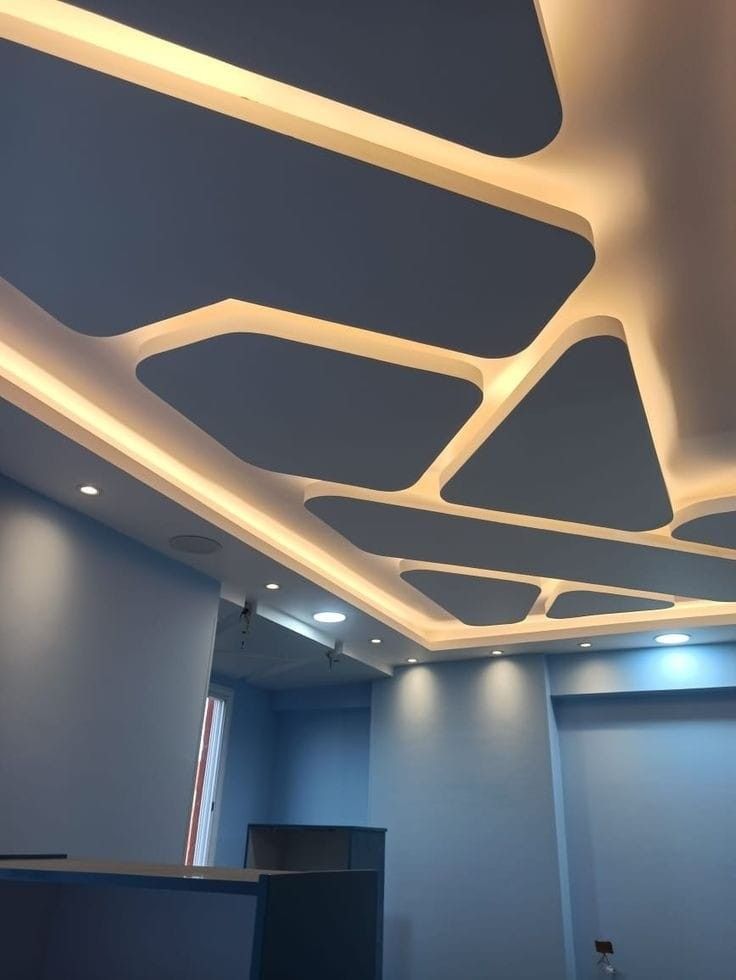
Example: Cost of Gypsum Ceilings for Different Room Sizes
Room size is one of the easiest ways to create an initial budget. The following examples use the indicative rates above to show how costs change with the ceiling area.
| Ceiling area | Plain ceiling | Simple modern ceiling | Stepped ceiling |
|---|---|---|---|
| 9 m² | KES 9,000–13,500 | KES 13,500–22,500 | KES 18,000–31,500+ |
| 12 m² | KES 12,000–18,000 | KES 18,000–30,000 | KES 24,000–42,000+ |
| 16 m² | KES 16,000–24,000 | KES 24,000–40,000 | KES 32,000–56,000+ |
| 20 m² | KES 20,000–30,000 | KES 30,000–50,000 | KES 40,000–70,000+ |
| 30 m² | KES 30,000–45,000 | KES 45,000–75,000 | KES 60,000–105,000+ |
| 50 m² | KES 50,000–75,000 | KES 75,000–125,000 | KES 100,000–175,000+ |
These estimates are calculated by multiplying the room’s ceiling area by the applicable planning rate. They do not guarantee the amount payable for a complete project.
Lighting, painting, repairs, access restrictions, special finishes and other items may be charged separately. Detailed ceiling designs can also require additional work beyond a simple square-metre calculation.
Example: Budgeting for a 20 m² Living Room
Suppose your living room measures 4 metres by 5 metres.
Ceiling area = 4 m × 5 m = 20 m².
Using the estimated rates:
- Plain gypsum ceiling: KES 20,000–30,000.
- Simple modern ceiling: KES 30,000–50,000.
- Stepped ceiling: KES 40,000–70,000+.
- Feature ceiling with cove lighting: KES 50,000–90,000+.
- Complex premium ceiling: KES 80,000–120,000+.
These figures help you compare design options before requesting a formal quotation. Ask the installer to specify whether the rate covers LED strips, drivers, light fittings, painting, wiring and installation labour.
A basic ceiling with a few carefully positioned lights may meet your needs without the added expense of a multi-level design.
What Makes Up the Total Gypsum Ceiling Installation Cost?
The total cost consists of several components. Looking at them separately helps explain why two quotations for similar-looking ceilings may differ.
1. Gypsum Boards
The boards form the visible ceiling surface. Their price depends on the brand, thickness, dimensions and whether the project requires a specialist board type.
The quantity also affects material use. Contractors need to account for the ceiling layout, cutting, joints and offcuts rather than simply buying boards equal to the measured area.
2. Supporting Framework
The framework supports the gypsum boards and holds the ceiling in the required position. The selected system, spacing, ceiling height and design complexity affect the amount of material required.
Do not judge a quotation only by the board price. The supporting framework and quality of installation are important to the finished ceiling.
3. Fixings and Jointing Materials
Screws, anchors, jointing tape, filler and other accessories help fix the boards and prepare the surface for finishing.
These materials are essential even when the ceiling design is simple. A quotation that omits them may not represent the full installation cost.
4. Labour
Labour covers tasks such as measuring, setting out, building the framework, fixing the boards, forming decorative features and finishing the joints.
Complex curves, multiple levels, detailed coffers and lighting channels normally require more time than a flat ceiling.
5. Painting and Final Finishing
Painting may be included in some quotations and excluded from others. Surface preparation, joint treatment, primer and the chosen paint system affect the final cost.
Confirm whether the quotation covers a paint-ready surface or the completed painted ceiling.
6. Lighting and Electrical Work
LED strips, drivers, downlights, pendant points, switches, dimmers and electrical installation can add significantly to the budget.
For example, a quotation may include a recessed cove but exclude the actual LED strip and driver. Another may provide a more complete lighting package. Ask for a written breakdown so you can compare like with like.
7. Transport and Site Conditions
Transport, working height, access to the property and the condition of the existing ceiling may influence the total price.
A renovation may also require removal of old materials, repairs or changes to existing electrical wiring.
Materials-Only Cost vs Supply-and-Installation Cost
One important distinction is the difference between purchasing materials and paying for a complete installation.
Materials-only prices may cover boards and selected accessories, but they do not necessarily include framing, fixings, waste, jointing materials, labour, painting or lighting.
For a supply-and-install quotation, ask the contractor to specify which of the following are included:
- Gypsum boards and supporting framework.
- Screws, anchors, jointing tape and filler.
- Decorative framing, bulkheads or recessed sections.
- Joint finishing and surface preparation.
- Primer and paint.
- LED strips, drivers, downlights and controls.
- Electrical wiring and installation.
- Access panels or adjustments to existing services.
- Transport, waste handling and any additional site work.
This list helps you compare quotations based on the completed work instead of a headline rate alone.
Factors That Affect Modern Gypsum Ceiling Prices in Kenya
1. Ceiling Area
Larger ceilings generally need more boards, framework, finishing materials and labour. However, small rooms with many corners, recesses or decorative details can have higher costs per square metre.
2. Design Complexity
Flat ceilings are usually simpler than tray, coffered, curved, floating or multi-level designs. Every additional shape or level can increase measuring, framing, cutting and finishing work.
3. Board Specification
Standard boards may suit many interior applications, while moisture-resistant or fire-rated products may be needed for particular conditions or project specifications.
Select the correct board for the environment rather than paying for a specialist product without a clear requirement.
4. Lighting Requirements
Basic lighting points differ from complete cove-lighting systems with LED strips, drivers and dimmers. The number and type of fittings can change the final project budget.
5. Ceiling Height and Access
High ceilings may require additional access equipment and working time. Difficult access or restricted working hours can also affect labour costs.
6. Existing Ceiling Condition
Leaks, cracks, damaged surfaces and old fittings may require attention before installation. Covering unresolved damage can lead to problems with the new ceiling.
7. Painting and Decorative Finishes
Smooth finishing, special paint colours and decorative effects may increase the amount of work required. Detailed designs often take longer to prepare and paint neatly.
8. Location and Transport
Transport costs, material availability and site conditions can influence the quotation. Confirm the project location when requesting an estimate, especially for work outside major towns.
9. Commercial or Specialist Requirements
Offices, hotels, restaurants and other commercial properties may need specific acoustic, fire-performance, service-access or maintenance arrangements. These requirements can change both the materials and installation process.
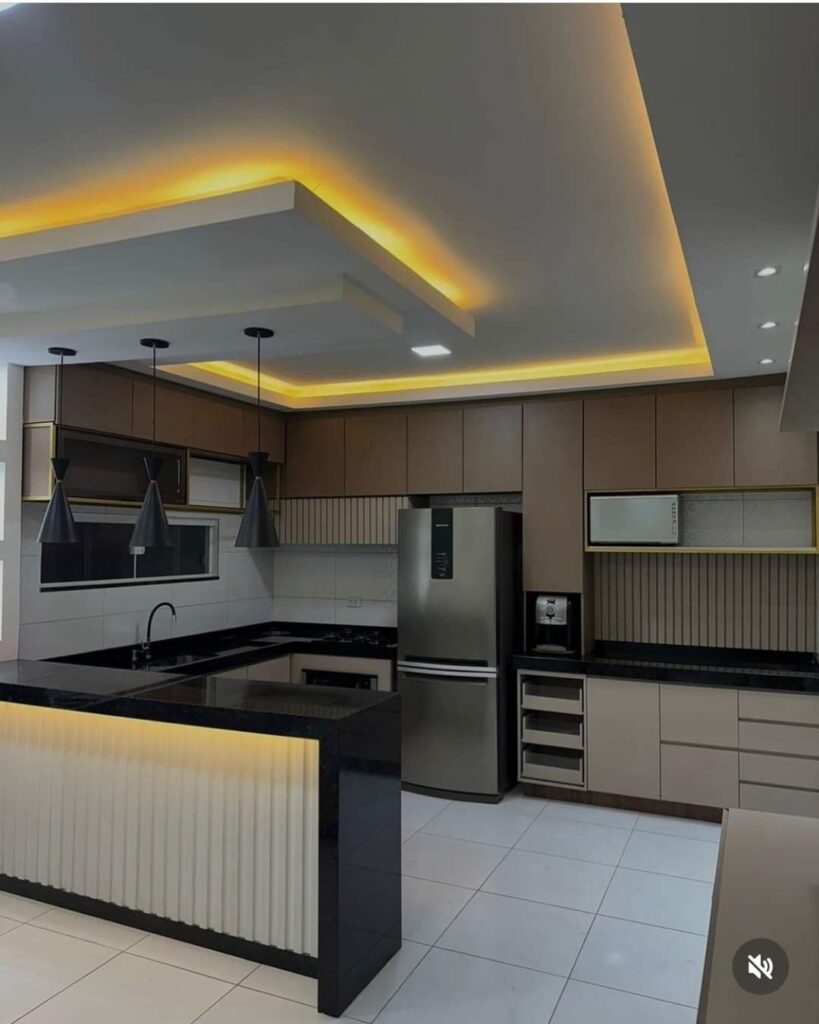
Gypsum Ceiling vs PVC Ceiling: Which Is Better Value?
The right ceiling material depends on your budget, preferred finish and how you plan to use the space.
| Feature | Gypsum ceiling | PVC ceiling |
|---|---|---|
| Appearance | Smooth, paintable finish | Available in panel finishes and patterns |
| Design flexibility | Supports custom shapes, trays and layered features | Depends on the selected panel system |
| Concealed lighting | Can accommodate planned coves and recessed details | Depends on the system and fitting arrangements |
| Maintenance | Damaged or stained sections may need repairs and repainting | Some surfaces are easier to wipe clean |
| Cost | Complex designs and lighting can increase the price | May be cheaper for basic installations |
| Best suited to | Custom interiors and seamless decorative finishes | Projects prioritising a practical panel finish |
Neither option is automatically best for every room. Compare the full installed price, material suitability, appearance, expected maintenance and required lighting.
For a modern interior with custom shapes and concealed lighting, gypsum may justify the extra cost. For a straightforward ceiling where cost and easy cleaning are the main priorities, another ceiling system may be worth considering.
How to Reduce Gypsum Ceiling Costs Without Sacrificing Quality
You do not need a premium multi-level ceiling to achieve a modern finish. These practical decisions can help control your budget.
Choose a design that fits the room. A simple ceiling or shallow border may look more balanced than several decorative layers.
Plan lighting before construction. Decide on the light positions, wiring routes and drivers before fixing the boards. Late changes can lead to extra cutting and rework.
Use decorative features selectively. Reserve tray ceilings, floating panels and complex shapes for the areas where they create the most value.
Compare itemised quotations. Ask each contractor to specify board type, framework, labour, finishing and lighting inclusions.
Avoid choosing solely by the lowest price. Check the supporting framework, materials, workmanship and preparation for painting.
Address repairs before installation. Resolve leaks, damage and other existing problems before covering the ceiling.
Plan related renovation work together. If you are also changing flooring, painting or electrical services, coordinate the work to reduce duplication and avoid damaging completed finishes.
Common Mistakes When Budgeting for Gypsum Ceilings
Many ceiling-budget problems arise from unclear specifications rather than the design itself.
- Using the floor area without checking the actual ceiling layout: Recesses, unusual shapes and room configuration can affect material quantities.
- Assuming all prices include installation: A materials-only price is not comparable with a completed ceiling quotation.
- Forgetting the lighting budget: LED strips, drivers, downlights and electrical work may be separate charges.
- Ignoring painting and joint finishing: A paint-ready ceiling may not include the final finish.
- Choosing too many decorative levels: Extra shapes may increase the cost without improving the room’s overall appearance.
- Accepting a vague quotation: Confirm the materials, labour, finishing, lighting, transport and exclusions in writing.
- Overlooking service access: Concealed wiring and equipment may need access for future maintenance.
- Failing to check the contractor’s scope: Agree on the design and workmanship expectations before installation starts.
A clear written scope makes it easier to control the budget and resolve questions before the project begins.
Gypsum Ceiling Installation Process
A structured process helps ensure that the final ceiling matches the agreed design and quotation.
Step 1: Measure the Ceiling
Record the room dimensions and check the existing ceiling height. Identify unusual corners, beams, service routes and other features that may affect the layout.
Step 2: Choose the Design
Select a flat, stepped, tray, coffered, floating or other suitable ceiling design. Confirm the layout and lighting requirements before materials are ordered.
Step 3: Confirm Materials and Costs
Specify the board type, framework, fixings, finishing materials and painting requirements. Request a written breakdown of the expected cost.
Step 4: Plan Lighting and Services
Confirm light positions, wiring routes, drivers, switches and access requirements. Coordinate the ceiling design with air-conditioning or other services where necessary.
Step 5: Install the Framework and Boards
The installer sets out the framework and fixes the boards according to the approved design and the selected installation system.
Step 6: Finish and Paint
Treat the joints, prepare the surface and apply the agreed finish. Decorative ceiling details may require additional time to finish neatly.
Step 7: Install and Test the Lighting
Fit the specified lights and controls, then inspect their alignment and operation. Confirm that serviceable components remain accessible.
Step 8: Inspect and Handover
Review the finished ceiling against the agreed scope. Resolve outstanding items before accepting the completed installation.
The timeline depends on the ceiling area, design complexity, materials, site conditions and whether other renovation work is taking place at the same time.

Why Choose Renovation.co.ke for Gypsum Ceiling Projects?
A successful gypsum ceiling project combines design, materials, workmanship and clear cost planning. Choosing a suitable design and confirming the full installation scope help avoid unnecessary expenditure.
Renovation.co.ke supports homeowners and businesses planning ceiling upgrades as part of wider renovation projects. Whether you need a basic ceiling, a modern tray design or a feature ceiling with integrated lighting, start with your room dimensions, design preferences and budget.
When requesting a quotation, prepare the room measurements, project location, ceiling style, lighting needs and photos of the existing space. Ask for a written scope that clearly states what the quoted price includes.
You can also explore SUIMAS gypsum ceiling design options, InteriorDesigners.co.ke and Interior Finishes when coordinating your ceiling with other interior finishes.
Areas We Serve Across Kenya
Gypsum ceiling installation enquiries can cover all 47 counties: Baringo, Bomet, Bungoma, Busia, Elgeyo-Marakwet, Embu, Garissa, Homa Bay, Isiolo, Kajiado, Kakamega, Kericho, Kiambu, Kilifi, Kirinyaga, Kisii, Kisumu, Kitui, Kwale, Laikipia, Lamu, Machakos, Makueni, Mandera, Marsabit, Meru, Migori, Mombasa, Murang’a, Nairobi City, Nakuru, Nandi, Narok, Nyamira, Nyandarua, Nyeri, Samburu, Siaya, Taita-Taveta, Tana River, Tharaka-Nithi, Trans Nzoia, Turkana, Uasin Gishu, Vihiga, Wajir and West Pokot.
Within Nairobi, enquiries may include properties in Nairobi CBD, Westlands, Kilimani, Kileleshwa, Lavington, Karen, Runda, Kasarani, Roysambu, South B and South C. In Mombasa, projects may include Nyali, Bamburi, Kizingo and Tudor. Transport, site access, scheduling and service availability depend on the project requirements and location.
Get a Quotation for Modern Gypsum Ceiling Designs
The cost of modern gypsum ceiling designs in Kenya varies according to the design, ceiling area, materials, labour, lighting and finishing. A flat ceiling may suit a tight budget, while a tray, stepped or floating design can provide a more distinctive finish at a higher cost.
Start by measuring the space, selecting a suitable design and deciding which lighting features you need. Then compare written quotations that state the materials, workmanship and inclusions clearly.
Contact Renovation.co.ke to discuss your gypsum ceiling project and request an estimate based on your requirements.
Visit the Renovation.co.ke contact page to make an enquiry.
Frequently Asked Questions
1. How much does a modern gypsum ceiling cost per square metre in Kenya?
The published SUIMAS planning guide lists KES 1,000–1,500 per m² for a plain ceiling, KES 1,500–2,500 for a simple modern design, KES 2,000–3,500+ for stepped designs and KES 2,500–4,500+ for a feature ceiling with cove lighting. Complex designs may cost more. Confirm the current project rate and inclusions before budgeting.
2. How much does a 20 m² gypsum ceiling cost?
A 20 m² plain ceiling at KES 1,000–1,500 per m² gives an indicative ceiling cost of KES 20,000–30,000. A feature ceiling with cove lighting at KES 2,500–4,500+ per m² gives KES 50,000–90,000+. These calculations are estimates and may exclude items not included in the quoted rate.
3. What is the cheapest modern gypsum ceiling design?
A plain flat gypsum ceiling is generally one of the simplest options. A slim decorative border can provide a more modern look without the additional work required for a complex multi-level design.
4. Does the gypsum ceiling price include painting?
Not always. Some quotations include joint finishing and a paint-ready surface, while others include primer and final paint. Confirm the paint specification and finishing scope in writing.
5. Are LED lights included in gypsum ceiling installation costs?
Not necessarily. The price may include the ceiling structure but exclude the LED strips, drivers, downlights, switches, wiring and electrical labour. Ask for a separate lighting breakdown if those items are not included.
6. Why do different contractors give different gypsum ceiling prices?
Their quotations may cover different boards, framework, design complexity, finishing, lighting and labour. Compare the complete scope and materials rather than relying on the headline rate per square metre.
7. Is a multi-level gypsum ceiling more expensive?
Usually. Multiple levels, curves, floating panels and decorative coffers require additional framing, cutting, setting-out and finishing. Lighting integration can add further cost.
8. Can I install a gypsum ceiling in a kitchen or bathroom?
Gypsum systems may be suitable when the selected board, finish and installation match the environmental conditions. Standard gypsum boards are not waterproof. Address leaks and ensure suitable ventilation before installation.
9. How can I reduce gypsum ceiling installation costs?
Choose a design proportionate to the room, plan lighting early, compare itemised quotations and avoid decorative features that do not improve the overall result. Make sure the quotation still includes an appropriate framework and proper finishing.
10. How do I estimate the ceiling area?
For a rectangular room, multiply its length by its width. For example, a room measuring 4 metres by 5 metres has an approximate ceiling area of 20 m². Irregular layouts may require separate measurements.
11. Is gypsum cheaper than PVC ceiling panels?
PVC can be less expensive for basic installations, while gypsum offers a smooth, paintable surface and greater flexibility for custom shapes and concealed lighting. Compare the complete installed cost and the requirements of the room before deciding.
12. What should I check before accepting a gypsum ceiling quotation?
Confirm the ceiling measurements, board specification, supporting framework, labour, jointing, painting, lighting, electrical work, transport, access panels and exclusions. Ensure that the quotation matches the design you approved.